


CHYM Milestone: Nashville's Half-Cent Delivers New WeGo Buses and More
- jessicadauphin
- Jan 7
- 2 min read
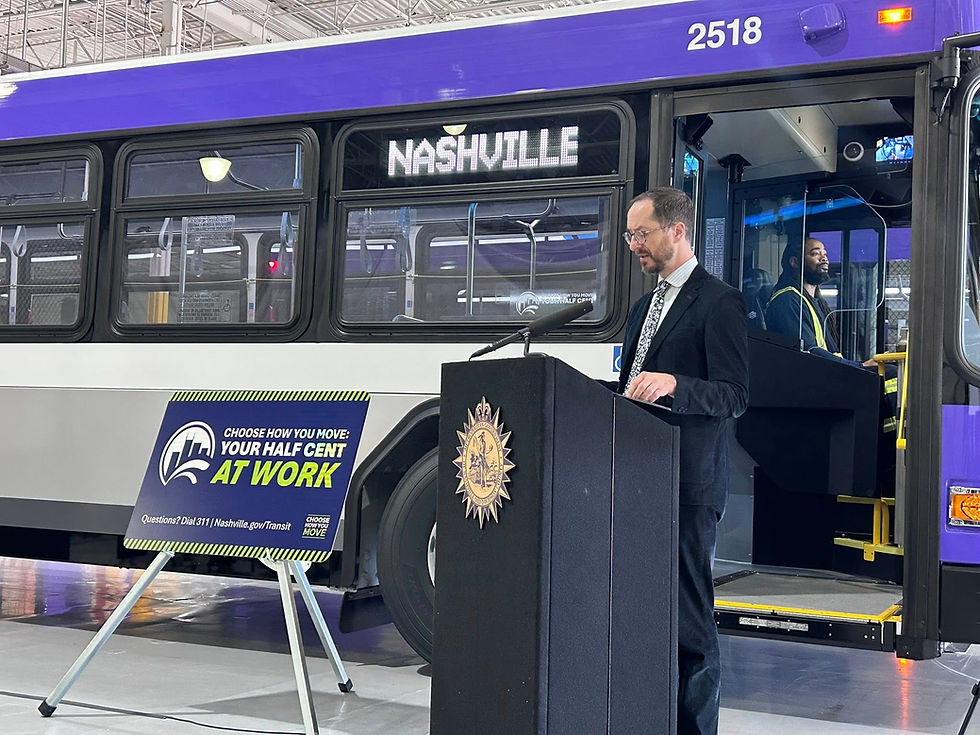
Nashville Mayor Freddie O'Connell speaks at a media event on January 7, 2026, providing updates on the progress of Choose How You Move.
The invitation read: WeGo celebrates Choose How You Move-funded buses and expanded service. But Wednesday's media event at WeGo Transit was about more than unveiling new buses. It was a celebration of community desires and a clear reminder that when we invest in transit, that investment has a measurable impact on service reliability and on the economy. Investments in transit are investments in people that directly impact quality of life.
The new buses now entering service were made possible by the voter-approved Choose How You Move half-cent sales tax (2024). And as Nashville Mayor Freddie O’Connell emphasized, that investment is already paying dividends.
“We are moving from an antiquated hub-and-spoke system to a modern, connected network,” the Mayor said. Modernization means more buses, increased frequency, and more reliable connections. This benefits the workers who rely on transit every day, the occasional rider, those who walk or bike, and those who opt to drive their cars.
Transit Is a Workforce Strategy
The shiny, new buses were visually pleasing, but one of the more striking visuals at today’s event wasn’t just the buses themselves. It was the breakdown of where each major component is made. From propulsion systems to doors, seating, and safety equipment, these buses represent jobs across the United States, including right here in Tennessee.

But the workforce impact doesn’t stop at the factory floor.
Transit investment strengthens our local economy by creating and sustaining good-paying jobs in our own community. Think of bus operators, maintenance technicians, dispatchers, planners, and support staff who keep the system running every day. As service expands, so does the need for skilled workers to operate and maintain a modern transit system.
That’s why transit investment isn’t just about moving people. It’s about sustaining American manufacturing, supporting skilled labor, and building supply chains and local careers that strengthen regional economies. Every new bus ordered supports workers well beyond Nashville ZIP codes. Every route expansion helps employers reach the workforce they need.
It’s a virtuous cycle: investment leads to better service, better service drives growth, and growth creates more opportunity.
Transit doesn’t just support riders—it supports all of us.
More Service, Less Stress
That connection was especially clear during the discussion of service improvements benefiting major employers like Vanderbilt University Medical Center, which employs more than 40,000 people across multiple shifts.
With expanded frequency and longer service hours, employees working early mornings, late nights, and overnight shifts can focus on their patients and their jobs—not on whether they’ll miss the last bus home. That reliability is a quality-of-life improvement for workers and a competitive advantage for employers.
The Results Are Already Showing
According to WeGo leadership, ridership is up 4.6% year-over-year—a clear signal that when service improves, people respond. This isn’t abstract policy. It’s real-world impact.
The sign on display at today’s event said it best: “Your Choose How You Move half-cent at work.” It’s at work creating jobs. It’s at work supporting public safety and quality of life. And it’s at work building a transit system that meets the needs of a growing Middle Tennessee.
The message from today was simple—and worth repeating: Try transit.

